Phoenix (2024)
“Oppressed people must shout together, louder and more vividly so that our shared struggle cannot be ignored.”
- composer Sahba Aminikia
"Iranian women experience discrimination in law and practice in ways that profoundly impact their lives, particularly concerning marriage, divorce, and custody issues. Post-1979 compulsory hijab laws affect virtually every aspect of women' s public life in Iran. On 20 September 2022, 16-year-old Iranian girl Nika Shakarami disappeared in Tehran during the 2022 Iranian protests following the death of Mahsa Amini; on 16 September 2022, a 22-year-old Iranian woman died in a hospital in Tehran, Iran, under suspicious circumstances while under the custody of Iranian morality police.
Nika' s family was informed of her death ten days later. She had died under suspicious circumstances suspected to involve violence by security forces. In Iran, public protests against rules forcing women to wear the hijab, the Islamic headscarf, have ended, at least for now. This piece is a testament to the power of three generations of Iranian women from the beginning of the 20th century until now. Iran has a 150-year history of movements promoting women' s rights, both before and after the revolution of 1979. Most of them pursued a vision of equality under the law.
They sought to redress the gap regarding legal protection by promoting international human rights instruments. As a man growing up in Iran, I was raised by these three generations of women in my own family, my grandmother, my mother, and my older sister, who each belong to different generations of women who carried different expectations and lived through different historic periods; however, all three were extremely powerful, full of life energy and love. My generation grew up with such women, and this made us observe and confirm that the next major social and political revolution in Iran will be indeed by women.”
- Sahba Aminikia
In exploring the stories of the women of my own family, I was intrigued to discover a very long tradition of Iranian women’s public protest that was fearless and dramatically charged, as well as their creative resistance to patriarchy in the private realm. My research led me to understand how the stunning uprising that we have witnessed recently on the streets of Iran’s cities has deep roots: the symbolic removal of hijab is not a simple response to modernity and foreign influence, but part of a more profound movement within the culture itself, and women’s role at its forefront is essential to its success. This piece distills the essence of countless stories that I gathered into the voices of three generations of Iranian women, grandmother, mother, and daughter. Where past generations trusted to the future and placed hope in their daughters, today the daughters are standing firm and saying that the change must come from us now, in our own lifetimes. Like the Phoenix, or Qaqnus as it is known in Iranian mythology, who lays no egg, their future comes from their own transformation and rebirth through fire. And though it is the young women who lead, the power of transformation is fueled by the fire of a shared pain, dard-e moshtarak that the men have experienced too. It is this force of empathy that empowers a mutual transformation and the hope for a future of equality.
- Zara Houshmand
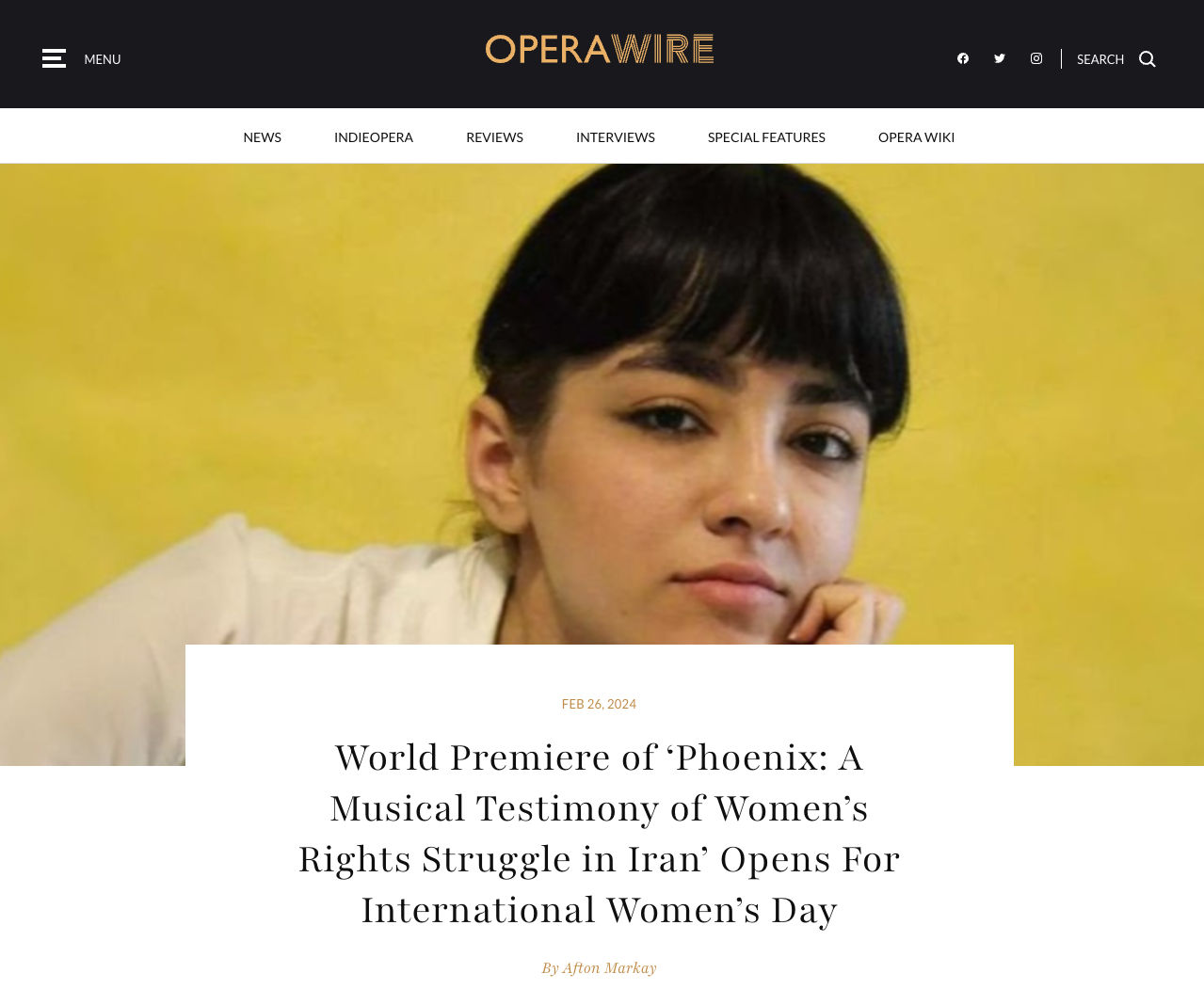
The story of Nika Shakarami’s story has inspired a new musical work, written by the Iranian American creative team of composer Sahba Aminikia and librettist Zara Houshmand. “Phoenix,” (or “Qaqnus” in Persian) receives its world premiere on March 10 at Benaroya Hall in Seattle.
On Sept. 20, 2022, 16-year-old Nika Shakarami joined other Iranian girls and citizens in protesting the death of Mahsa Amini, who died in the custody of the Iranian morality police after appearing in public without the mandated head covering. Nika climbed atop an overturned garbage bin, set her headscarf on fire in full view of hostile police forces, and chanted “death to the dictator.” A few hours later, she went missing – and 10 days later, she was dead.
Sopranos Vanessa Isiguen and Madeline Ross, and mezzo-soprano Rachel Hauge’s voices representing three generations of Iranian women who share the challenges that have demanded their courage and the deep cultural history underlying the current uprising. The work has been commissioned by Music of Remembrance (MOR), a Seattle-based organization widely acclaimed for its commitment to developing new works that use art to confront compelling issues in today’s world. MOR Artistic Director Mina Miller has programmed the work’s world premiere alongside International Women’s Day.
“Iran has a 150-year history of movements promoting women’s rights and pursuing a vision of equality under the law,” said composer Sahba Aminikia in a press release. “Growing up in Iran, I was raised by my grandmother, my mother, and my older sister, who each carried the expectations of the different historic periods they lived through. My generation knows that the next major social and political revolution in Iran will be led by women. Like the qaqnus of Persian mythology, the future of the Iranian people will be created by our own transformation and rebirth through fire.”